
Understanding your utility bill - the “data center edition”
AI data centers are beginning to reshape utility economics across the United States.
PPL now has 20 gigawatts of contracted large loads in its interconnection pipeline. By comparison, the utility’s current peak load across 1.5 million customers is 7.8 gigawatts.
That gap helps explain why electricity costs, interconnection queues, transmission planning, and grid capacity have become central infrastructure concerns in the AI era.
The conversation around AI infrastructure often focuses on GPUs, hyperscalers, and compute demand. But the effects are increasingly visible in something far more familiar: utility bills, grid constraints, and the physical systems that deliver power to homes and businesses every day.
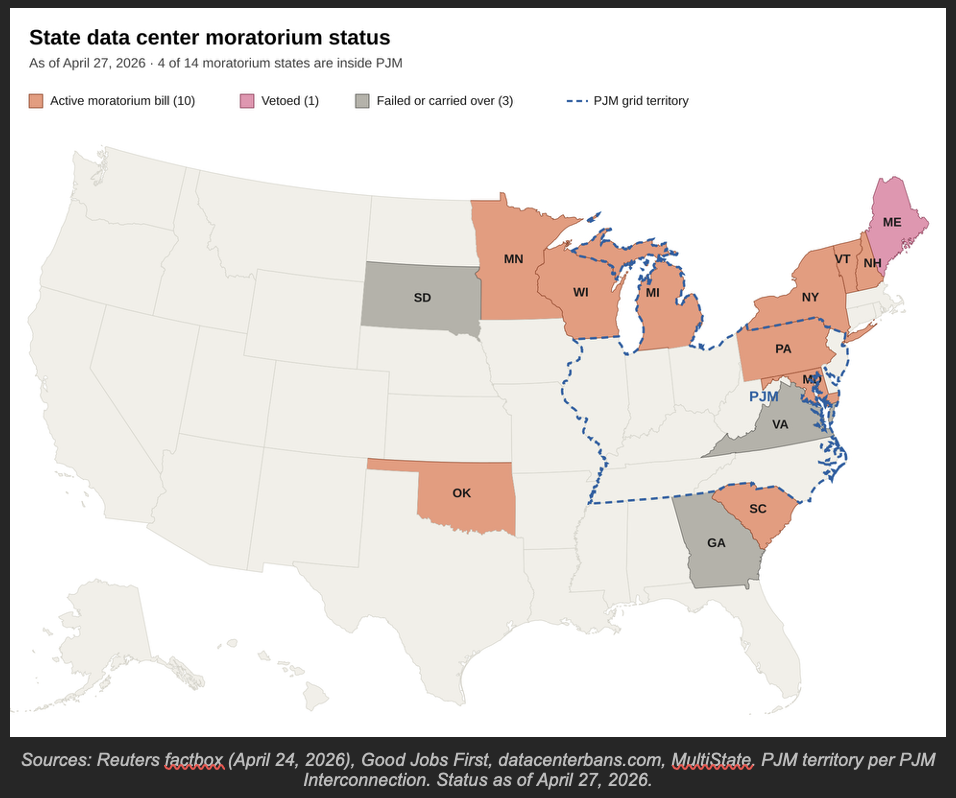
A data center moratorium is not an energy policy. Neither is a pledge.
A data center moratorium is a signal of drift, not strategy. The grid is strained, costs are rising, and communities are paying for it but freezing development solves none of it. The real lever is a framework that forces participation: demand flexibility, shared infrastructure, and economic return to the locality. Pennsylvania has the inputs. The question is whether it chooses control or delay.

Voyager: from system to artifact
Most people think Voyager is a story about space.
It is actually a story about how systems are designed to last.
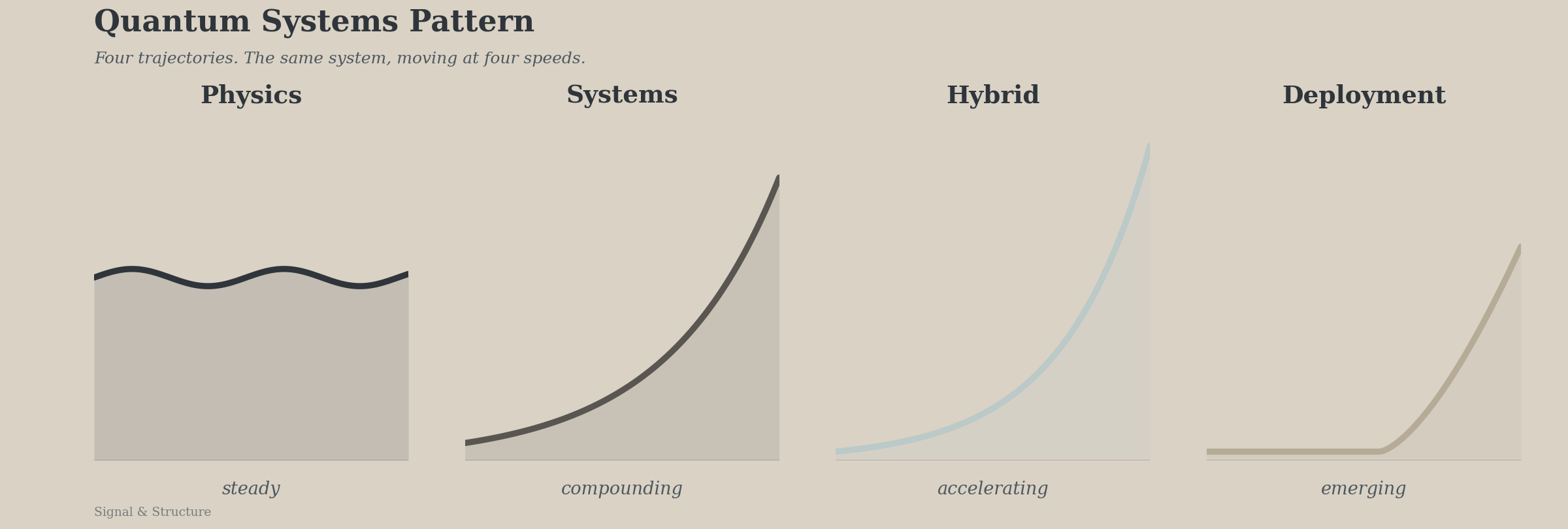
Quantum isn’t just accelerating. It’s aligning
Quantum is not accelerating.
It is aligning.
The shift is not in the physics alone, but in how systems, integration, and use cases are beginning to move together.